
Learn
Video lectures and slides for the Core Module and the General Academic Module.
7 lectures across both modules
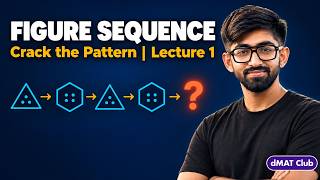 Lecture 1Figure SequencesRead four matrices, predict the next two.Video · slides
 Lecture 2Mathematical EquationsSolve for every variable in your head.Video · slides
 Lecture 3Latin SquaresTwo rules, and where to look first.Video · slides
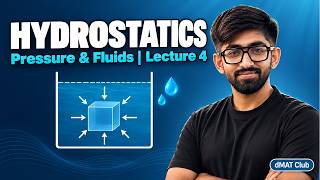 Lecture 4HydrostaticsPressure, floating and trapped air.Video · slides
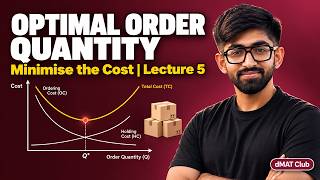 Lecture 5Optimal Order QuantityOne formula, and the square root in it.Video · slides
 Lecture 6Research StrategiesWhether something relates, or how it happens.Video · slidesLecture 7Vector CalculationsSlides only for now — the video is still to come.Slides
How a matrix series is built, and the only four things a figure can be doing: where it sits, where it is heading, what colour it is on, and which way it is turned. Work those out one figure at a time and matrices 5 and 6 fall out.
There are no options to work backwards from — you type a value for every variable. So the whole subtest is substitution and elimination done in your head, in order, without writing anything down.
Only two deduction rules exist, and one of them does almost all the work. Most of these are solvable in one or two moves once you know which cell to look at — and you never need to fill in the whole grid.
The first General Academic Module lecture. Nobody expects you to know physics going in — the text hands you every rule. This one teaches the five its questions run on: pressure with depth, floating, why air shrinks when water will not, the ten-metre suction limit, and why a wide ship leans less.
Nobody expects you to have studied logistics — the text hands you the model and one whole question does nothing but check you read its four assumptions. Then two costs pull in opposite directions, and the total has a floor between them.
The one General Academic Module text with no formula in it at all — it is purely about reading precisely. Everything hangs on one split: does a factor relate to an outcome, or how does the outcome come about?
The last of the four official practice texts, and the deck is up before the recording is. Vectors in three dimensions: adding them, the two different products and what each one gives you back, and the triple product that falls out of both.
Sit a mock first, check your progress for the subtest that cost you most, then watch that lecture. Watching cold works too — it is just slower, because a lecture lands properly once you have already lost marks to the thing it is about. The slides are the same material in presentation form (arrow keys to move, F for fullscreen) and open in a new tab.